
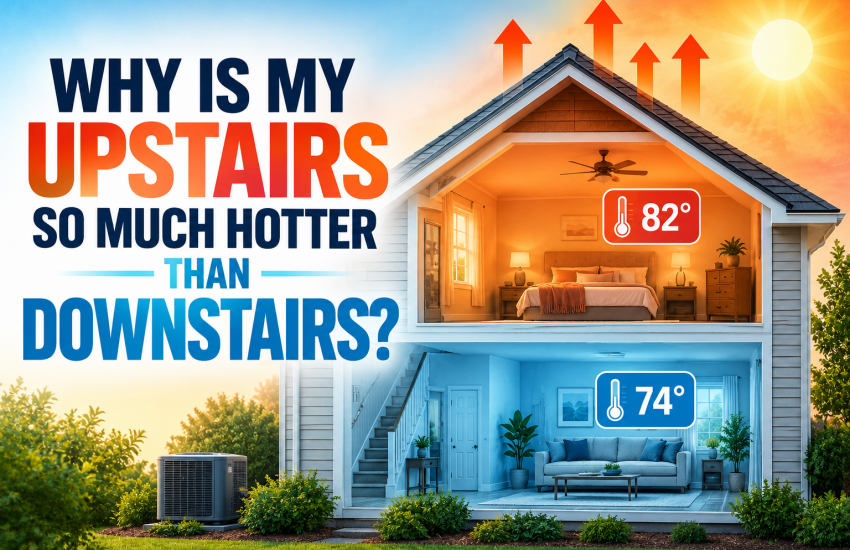
Why Is My Upstairs So Much Hotter Than Downstairs?
If your downstairs feels comfortable but your upstairs bedrooms are hot and stuffy, you’re dealing with one of the most common cooling complaints in two-story homes. During a South Carolina summer, the temperature difference can become especially noticeable in the afternoon and evening. While some variation between floors is normal, a large difference may indicate problems with insulation, airflow, ductwork, or your HVAC system.
At Superior Heating & Air Conditioning, LLC, we help homeowners in Elgin, Lake Carolina, Blythewood, Columbia, and surrounding communities identify why certain rooms won’t stay comfortable. The solution isn’t always a bigger air conditioner. Often, the best approach is to find out where heat is entering your home and whether conditioned air is reaching the upstairs rooms properly.
Why Is the Upstairs Hotter Than the Downstairs?
The short answer is that upstairs rooms often gain more heat while receiving less effective cooling. Heat rises through natural convection, but that’s only part of the explanation. Solar heat entering through the roof and windows, inadequate attic insulation, air leakage, and uneven HVAC airflow can all contribute.
Your thermostat can make the problem worse if it’s located downstairs. Once the first floor reaches the selected temperature, the AC may shut off even though the upstairs is still several degrees warmer.
Here are the most common causes and what you can do about them.
1. Heat Is Entering Through Your Attic
Your attic is one of the first places to investigate when upstairs rooms become uncomfortable during the summer.
As the sun heats your roof, the attic can become significantly hotter than the living space below. If the attic floor doesn’t have adequate insulation or has gaps in its air barrier, more heat can move into the upstairs rooms.
This is especially noticeable in bedrooms directly beneath the roof.
You may notice that the upstairs is reasonably comfortable in the morning but becomes progressively hotter throughout the afternoon. The AC may run for hours, yet the temperature doesn’t improve much until after sunset.
How Attic Insulation Helps
Insulation slows heat transfer between the attic and your living space. Air sealing is equally important because gaps around attic access panels, plumbing penetrations, recessed lights, and other openings can allow unwanted air movement.
The U.S. Department of Energy recommends addressing attic air leaks before adding insulation to existing vented attics. A properly sealed and insulated attic can improve comfort and reduce the amount of cooling your home needs.
If your attic insulation is inadequate, Superior’s blown-in insulation services may be part of the solution. An evaluation can help determine whether additional insulation, air sealing, or both would benefit your home.
2. Your Ductwork Isn’t Delivering Enough Cool Air Upstairs
Your air conditioner can be working properly while your ductwork prevents enough conditioned air from reaching the second floor.
Ducts may be leaking, disconnected, damaged, poorly insulated, or improperly sized. Long duct runs and restrictive bends can also affect airflow.
If your upstairs ducts travel through a hot attic, the problem can become more noticeable during peak summer temperatures. Poorly insulated ducts can gain heat before the conditioned air reaches your rooms, while leaks can allow some of that air to escape entirely.
Signs of possible ductwork problems include weak airflow from upstairs vents, rooms that never reach the thermostat setting, excessive dust, unusual airflow noises, and noticeably different temperatures between bedrooms.
Professional ductwork services can help identify whether the issue involves leakage, insulation, airflow restrictions, or the design of the duct system.
3. Your HVAC System May Be Poorly Balanced
Even when the ductwork is intact, the system may not be distributing air evenly between floors.
Airflow balancing involves evaluating how much conditioned air reaches different areas of the house and whether the system is delivering the appropriate amount to each space.
A two-story home may need more cooling upstairs during the summer because the second floor experiences greater heat gain. If the duct system wasn’t designed or adjusted with that in mind, the downstairs may cool quickly while the upstairs remains warm.
A technician can inspect supply and return airflow, duct sizing, dampers, and other components to determine whether adjustments are appropriate.
Avoid randomly closing large numbers of downstairs vents to force more air upstairs. Restricting airflow without understanding the system can create pressure problems and reduce HVAC performance.
4. Your Thermostat Is Reading the Downstairs Temperature
Most homes have a thermostat in a central location, often on the first floor.
That thermostat only knows the temperature where it’s installed.
If the downstairs reaches 74°F while the upstairs is still 79°F, the thermostat may tell the AC to stop cooling. The system has technically satisfied the thermostat, but it hasn’t made the entire house comfortable.
This is why lowering the thermostat isn’t always an effective solution. You might end up with a freezing downstairs and an upstairs that’s only slightly cooler.
Would a Zoning System Help?
In some homes, zoning can improve comfort by allowing different areas to have separate temperature controls.
A properly designed zoning system uses compatible equipment, controls, and dampers to direct conditioned air where it’s needed. However, zoning isn’t appropriate for every HVAC setup, and simply adding dampers without considering airflow requirements can create problems.
If you’re considering a new system, ask about zoning and other comfort options during your AC installation consultation.
5. Your Upstairs Windows Are Adding Heat
Windows can contribute significantly to uneven temperatures, particularly when they receive direct afternoon sunlight.
West-facing upstairs bedrooms are often among the hardest rooms to cool because they can receive intense sun during the hottest part of the day.
Older windows, inadequate shading, and air leaks around window frames may make the problem worse.
You can reduce some of this heat gain by closing blinds or curtains during peak sunlight, using appropriate window coverings, and sealing noticeable air leaks around windows.
These improvements won’t repair an HVAC problem, but they can reduce the amount of heat your AC has to remove.
6. Your AC May Be Undersized or Struggling to Keep Up
If your entire house is warmer than it should be, the problem may involve the air conditioner itself.
An undersized system may struggle to handle the home’s cooling load during extreme weather. An aging system with reduced performance may also have difficulty maintaining comfortable temperatures.
Other possible issues include dirty coils, restricted airflow, refrigerant problems, blower issues, and electrical component failures.
If the upstairs temperature difference is new or has become noticeably worse, that can be an important clue. A house that cooled evenly for years but suddenly develops hot rooms may have a mechanical or ductwork problem rather than a fundamental design issue.
Professional AC repair in Elgin, SC can help determine whether your equipment is operating correctly before you invest in larger home improvements.
7. Your Home May Have Air Leakage or Return Air Problems
Conditioned air needs a path back to the HVAC system after it enters a room.
If upstairs bedrooms have inadequate return airflow, especially when doors are closed, pressure differences can interfere with proper air circulation.
Air leakage around attic access points, ceiling penetrations, and other openings can also contribute to unwanted heat and humidity entering the home.
These issues are best evaluated as part of the home’s overall airflow and building-envelope performance rather than assuming every hot room needs an additional supply vent.
How Can I Make My Upstairs Cooler Without Replacing My AC?
Before investing in major equipment changes, there are several practical steps you can take.
Check Your Air Filter
A dirty filter can restrict airflow throughout the system. Replace it if needed and make sure you’re using a filter appropriate for your HVAC equipment.
Keep Vents and Returns Clear
Make sure furniture, rugs, curtains, and other objects aren’t blocking supply or return vents. Avoid closing vents throughout the house without professional guidance.
Use Ceiling Fans
Ceiling fans can make occupied rooms feel more comfortable by increasing air movement. They don’t lower the actual room temperature, so turn them off when the room is empty.
Reduce Afternoon Sunlight
Close blinds or curtains on windows receiving direct sunlight, especially in upstairs bedrooms.
Check Your Attic
If your attic insulation is visibly thin, uneven, or missing in certain areas, it may be worth having it evaluated. Don’t disturb insulation if you suspect asbestos or another hazardous material.
Schedule HVAC Maintenance
A professional inspection can identify dirty components, airflow restrictions, refrigerant issues, and other problems that may be affecting cooling performance.
Should I Get a Second AC Unit for My Upstairs?
A second system can be a good solution for some homes, but it shouldn’t be the first assumption.
Separate HVAC systems can provide independent temperature control for different floors, which may be particularly useful in larger homes or houses with substantial differences in cooling demand.
However, adding another system involves equipment, ductwork, electrical requirements, installation costs, and ongoing maintenance.
Before recommending a second unit, an HVAC professional should evaluate whether the existing system is properly sized and whether insulation, ductwork, airflow balancing, or zoning could solve the problem more efficiently.
Frequently Asked Questions
Is it normal for upstairs to be 5 degrees hotter than downstairs?
A small temperature difference between floors is common, but a consistent five-degree difference can indicate that your home isn’t cooling evenly. Attic heat gain, ductwork, airflow, thermostat placement, and HVAC sizing should all be considered.
Will adding attic insulation make my upstairs cooler?
It can, particularly if your attic is under-insulated or has significant air leakage. Insulation reduces heat transfer, but it won’t fix problems such as disconnected ducts or a malfunctioning AC.
Should I close downstairs vents to push more air upstairs?
Generally, you shouldn’t close large numbers of vents without professional guidance. Restricting airflow can affect system pressure and performance. A technician can determine whether airflow balancing is appropriate.
Can a smart thermostat fix uneven temperatures?
Some smart thermostats offer remote sensors or scheduling features that may improve comfort, but they can’t correct inadequate insulation, leaking ducts, or improperly sized equipment. The underlying cause still matters.
Why is my upstairs hotter at night?
Heat stored in the roof, attic, walls, and other building materials can continue affecting upstairs rooms after sunset. Poor insulation, limited airflow, and warm outdoor conditions may also contribute.
Get Your Upstairs Comfortable Again
You shouldn’t have to choose between a freezing downstairs and an uncomfortable upstairs. The right solution starts with understanding whether the problem is coming from your attic, ductwork, airflow, thermostat, or HVAC equipment.
Superior Heating & Air Conditioning, LLC serves homeowners throughout Elgin, Blythewood, Lake Carolina, Columbia, West Columbia, Ridgeway, Camden, Cayce, and surrounding South Carolina communities.
If your upstairs is much hotter than downstairs, call (803) 272-3071 or request an appointment online. Our team can evaluate your cooling system and help determine whether you need ductwork improvements, insulation, maintenance, or professional AC repair to make your home more comfortable.